August 13, 2026 · ownership
Shutting a Sub-Zero down before a Ponte Vedra summer
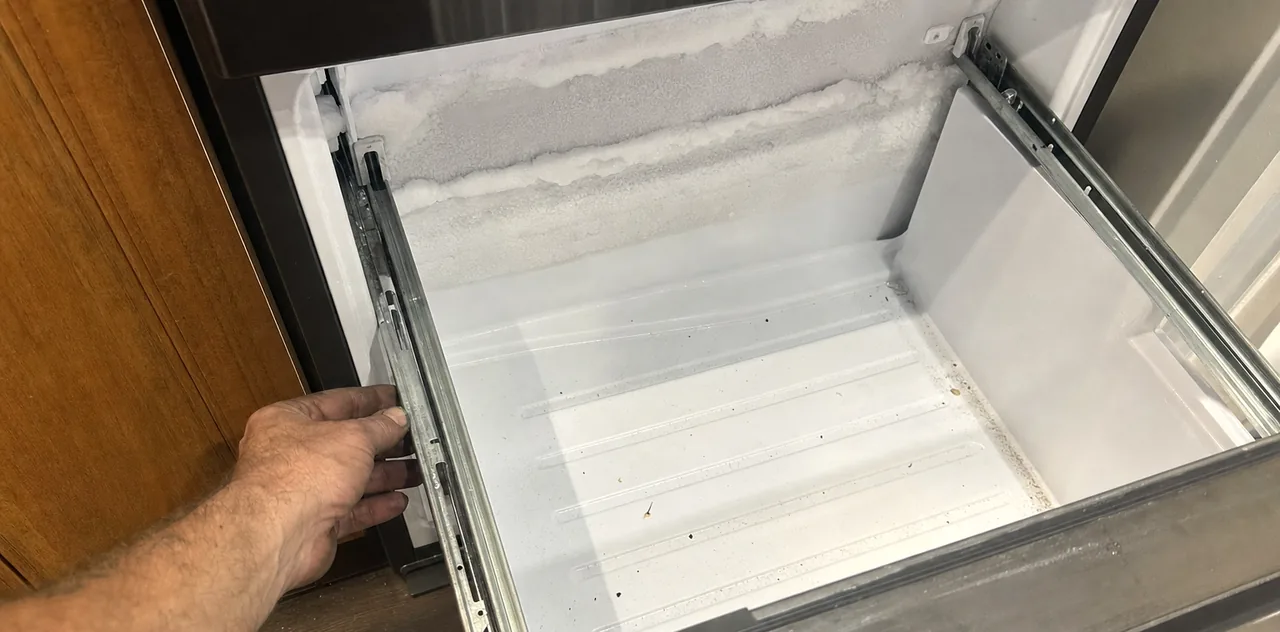
A meaningful share of the houses in 32082 are quiet for part of the year, and the refrigeration in them keeps working the whole time. That is not a neutral arrangement. An appliance running unattended through a Ponte Vedra summer is doing so in the hottest months, in the most electrically active part of the year, with nobody present to notice the first sign of anything going wrong.
Most of what follows is about that gap between when a fault starts and when somebody sees it.
The ice maker is the real decision
If you take one thing from this, take this one. An ice maker left running in an empty house makes ice into a bin nobody empties. The ice fuses into a block and the machine keeps cycling anyway, because nothing in it can tell the difference between a bin that is full of usable ice and a bin that is full of one solid lump.
You come back in October to a block nobody will use, a water line that has sat under pressure for four months, a fill valve and a drain that have been permanently wet the whole time, and a machine that has run several thousand cycles to produce nothing anybody drank. Four months of wear against zero output is the worst duty cycle any appliance in the house can be given.
Whether to shut the ice maker down depends on the unit and the supply, and on whether the water can be isolated cleanly, so it is worth asking rather than guessing. But for a house that will genuinely sit empty, leaving it running is rarely the right answer.
Emptying versus switching off
A refrigerator that is switched off, cleaned, dried and left with the doors propped is in a stable state. A refrigerator that is switched off, emptied in a hurry and closed is a sealed, humid box in a Florida summer, and it will grow things. If you are shutting a unit down, the doors have to stay open — that is not optional advice, it is the whole point.
Leaving it running has its own logic, especially for a house that will be visited occasionally, and it avoids the shutdown-and-restart cycle entirely. The trade is that a fault gets a full season to develop. Neither choice is wrong; they simply fail differently, and it is worth deciding deliberately rather than by default.
Storms and boards
This coast sees on the order of sixty-eight thunderstorm days a year. Control boards do not enjoy that, and neither do the small power interruptions that come with it. A unit that has been unattended all summer and comes back behaving oddly — a display that does not respond as it should, a cycle that will not complete, settings that have reverted — has usually been through more electrical events than anyone was there to count.
Surge protection is worth having and is not a guarantee. What it mostly buys you is that the failure, when it comes, is more likely to be recoverable.
The outdoor units are the ones to worry about
Anything on a pool deck or in a summer kitchen spends the empty months in the harshest conditions on the property: full ambient, direct salt, no building envelope, and no one opening the door. An outdoor refrigerator running empty through July is accumulating wear with no benefit whatsoever, and its condenser is corroding on the fastest schedule of anything you own.
For an exposed unit, shutting down and drying out for the season is usually the better trade, and the door still has to stay open.
What we suggest, in practice
Book the look before you leave rather than after you return. The pre-departure visit is worth more, because a condenser cleaned in May protects the unit through the months when nobody is watching it, and a marginal fan found in May does not become a compressor in August.
If you would rather do it on return, tell us the house was closed. It changes what we check first: drains, ice-maker water path, seals that have been shut against a warm cabinet for months, and the condenser. Flat diagnostic, credited toward the repair, written estimate before anything is opened, and EPA Section 608 certified technicians for anything involving the sealed system.
What it costs
What does a Sub-Zero ice machine repair cost in Ponte Vedra Beach?
Most of this work lands between $240 and $670, parts and labour together, and the visit that decides which end of that you are at is a flat $80 credited to the repair once you approve it. The firm number is written down after the diagnosis, not guessed at over the phone.
| Work | Typical range |
|---|---|
| Diagnostic visit | $80 flat, credited to the repair |
| Ice maker, water valve or supply line | $240–$670 parts and labour |
| Door gasket or seal replacement | $240–$650 parts and labour |
| Defrost heater, thermostat or sensor | $250–$640 parts and labour |
Written estimate before anything is opened up. The invoice carries one number; a band is what can honestly be published before the cabinet is open. The full table is on the pricing page.
Customer reviews
Visits behind this note
4.8 out of 5 from 67 customer reviews. Each one below is a single visit, described by the person who paid for it.
The machine would freeze one slab instead of separate cubes. He measured the evaporator plate temperature, found the hot gas valve stuck partly closed and replaced it. Cubes have come out clean since.
Lena G.2026-01-06
Harvest kept stalling with the slab still stuck to the plate. He descaled the circuit, found the harvest valve not opening fully and changed it, then stayed for two complete cycles before calling the job done.
Fiona T.2026-08-26
No ice at all for a fortnight. The trouble was a seized water pump in the reservoir, not the level sensor we had assumed. He carried the pump on the van and had it cutting clean cubes again that afternoon.
Renata V.2026-02-27
Questions we get asked
About Sub-Zero ice machine repair
- What does a Sub-Zero ice machine repair cost in Ponte Vedra Beach?
- Most of this work falls between $240 and $670, parts and labour together: ice maker, water valve or supply line runs $240–$670, door gasket or seal replacement runs $240–$650 and defrost heater, thermostat or sensor runs $250–$640. Which band your cabinet is in is what the diagnostic settles, and the figure on the written estimate is the one you are asked to approve.
- Is the $80 diagnostic charged on top of the repair?
- No. The $80 covers the visit and the whole diagnostic sequence, and it comes off the repair the moment you approve the work. Decide against it and the diagnostic is all you have spent: the written findings are yours to take anywhere you like. 90 days on labour, 365 days on parts, and genuine OEM parts on every repair.
- Should the water be turned off to the ice maker before a long absence?
- Yes, at the valve rather than at the machine. A supply left live for months is the one thing in the kitchen that can fail wet, and a machine told to keep making ice into a bin nobody empties will fuse the whole lot into a slab that takes a harvest cycle apart.
- Is a cabinet left running better off than one shut down?
- Neither is better; both are worse when done halfway. Left running, the condenser wants cleaning before you go. Shut down, it wants emptying, cleaning and the door propped open, because a sealed warm cabinet in a Florida summer grows things that outlast the season.
Related